
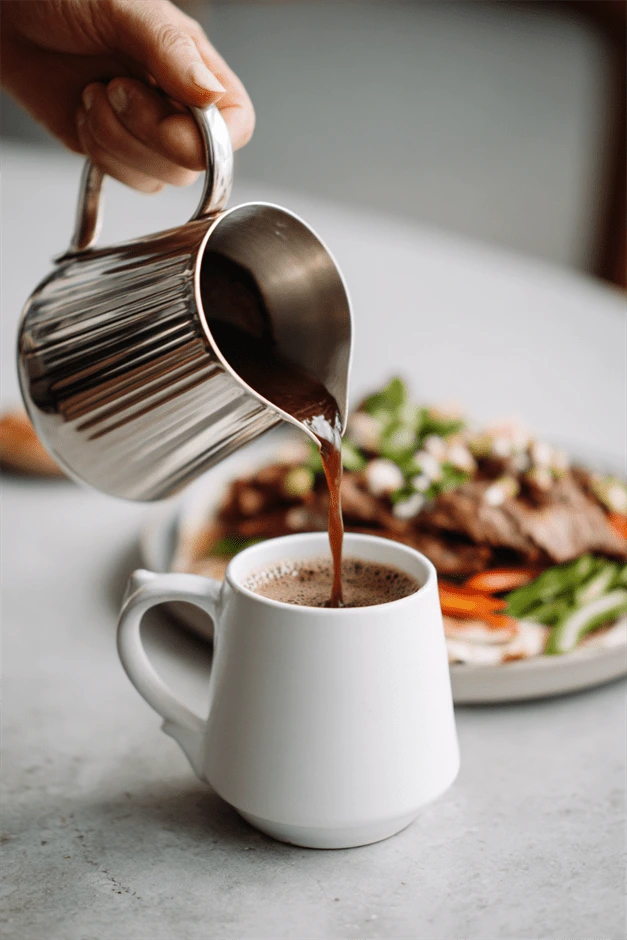
☕ How to Make Authentic Spanish Café con Leche at Home
Table of Contents
“A man will find that as he sips his morning coffee, he is sipping time itself.” — Balzac
And nowhere does this truth ring clearer than in Spain, where mornings begin with the comforting embrace of café con leche — half strong espresso, half steamed milk, served in a glass or wide cup.
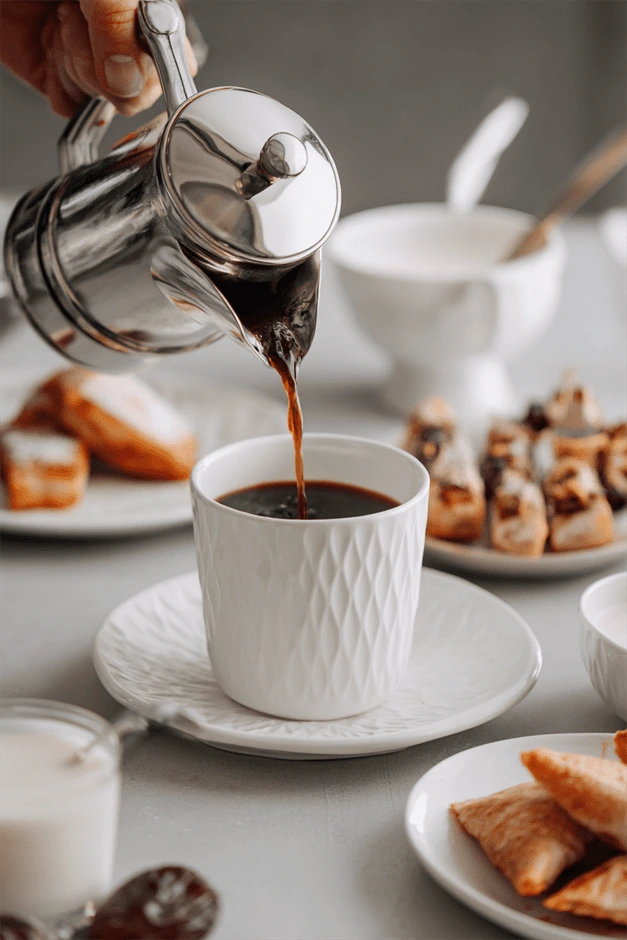
This is not just coffee. It’s a ritual, a rhythm, a way to start the day with warmth and balance. And today, we’ll bring that Spanish morning magic right into your own kitchen.
???? What Is Café con Leche?
At its simplest, café con leche means “coffee with milk.” But in Spain, it carries cultural depth:
- It’s the classic breakfast drink, often paired with a slice of toast drizzled with olive oil or spread with tomato.
- Unlike a latte, it’s stronger, closer to equal parts coffee and milk.
- It’s almost always served in the morning — though Spaniards won’t refuse it late at night either.
✨ Think of it as the Spanish answer to the Italian cappuccino, but with less foam and more soul.
???? A Little History
Coffee arrived in Spain in the 18th century, but it was in cafés of Madrid and Barcelona that café con leche became a national habit. Over time, it wove itself into everyday life — the hum of cafés, clinking spoons, and the comfort of a warm cup before the day begins.
???? Fun Fact: In some parts of Spain, you might hear people order it as mitad-mitad (“half-half”).
???? Ingredients You’ll Need
Crafting a true café con leche at home requires no elaborate tools — only patience and attention to detail.
✅ Basic Ingredients:
- Freshly ground espresso coffee beans (medium to dark roast)
- Whole milk (for creaminess, though you can substitute)
- Optional: a touch of sugar
???? Step-by-Step Recipe
Here’s how to recreate the Spanish ritual at home:
- Brew the Coffee ☕
- Make a strong espresso using a moka pot, espresso machine, or Aeropress.
- Aim for 1 part coffee.
- Heat the Milk ????
- Warm whole milk until it steams (about 65–70°C / 150–160°F).
- Froth lightly if you like, but avoid heavy foam — this is not a cappuccino.
- Combine Half & Half ➗
- Pour equal parts coffee and hot milk into a large cup or glass.
- Sweeten to Taste ????
- Add sugar if desired, though many Spaniards prefer it natural.
✨ Pro Tip: Serve it with pan con tomate (toasted bread with tomato and olive oil) for the real Spanish breakfast experience.
???? Quick Comparison: Café con Leche vs Latte vs Cappuccino
| Drink | Coffee | Milk | Foam | When to Drink |
|---|---|---|---|---|
| Café con Leche ???????? | 50% | 50% | Minimal | Morning or evening |
| Latte ????????/???????? | 25% | 75% | Light foam | All day |
| Cappuccino ???????? | 33% | 33% | Thick foam | Only before 11 a.m. |
???? Cultural Tips from Spain
✔️ Morning Ritual: Pair café con leche with churros or toast — never just coffee alone.
✔️ Glass vs Cup: In Spain, many cafés serve it in a tall glass rather than a mug.
✔️ Timing Matters: In Italy, milk coffee is strictly for mornings. In Spain, café con leche is more forgiving.
✨ Variations to Try at Home
- Café con Miel ????: Add honey instead of sugar for a softer sweetness.
- Café con Canela ????: Sprinkle cinnamon on top for Andalusian flair.
- Iced Café con Leche ❄️: Pour over ice for summer refreshment.
???? Why Make It at Home?
Making café con leche at home is more than saving money — it’s about inviting a Mediterranean rhythm into your mornings. You create a ritual: the grinding of beans, the slow steaming of milk, the first sip that feels like sunrise in Madrid.
“To drink coffee is to taste the world.” — and with café con leche, you taste Spain itself.